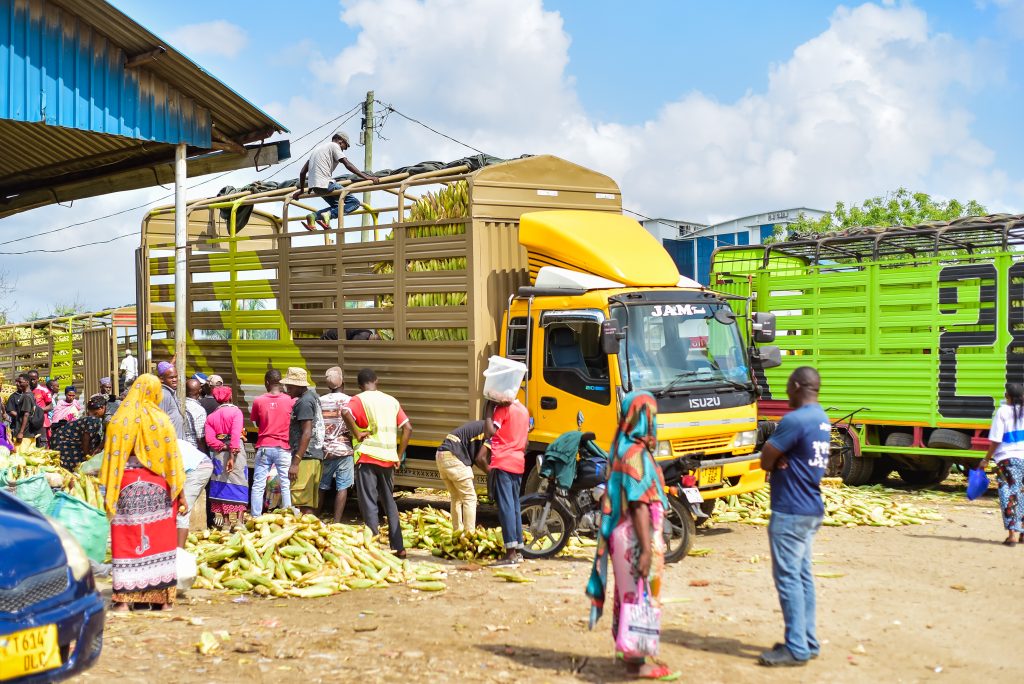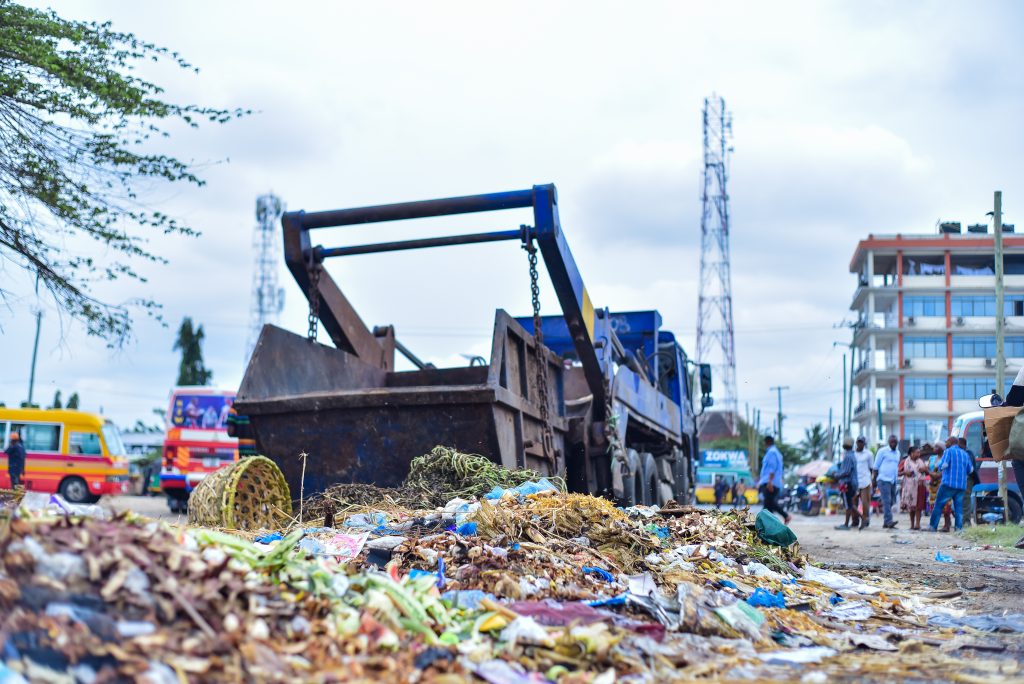

It’s 11 a.m. at Simu2000 Market in Ubungo. The air is thick with the scent of ripe mangoes, damp vegetables, and the day’s first pile of discarded fruit peels. Vendors shout prices while customers bargain hard for fresh produce. But not long ago, this same market was drowning in waste. Rotten fruit piled high behind stalls, drains were clogged, and flies ruled the air. “It was unbearable,” recalls Swalehe Mgwami, the market chairperson. “Previously, these fruits were simply being discarded, and some people would come to collect them to feed animals.” Before change came, the only “system” in place was the waste pickers, scavenging recyclables to earn a few coins and keep the area halfway clean. One of them was Ramadhan Madohora, a quiet but determined man who had worked as a market cleaner since 2016. Day after day, he moved between heaps of rotting fruit, plastic, and maize husks, doing what he could with what he had.
Meanwhile, the Ubungo Municipal Council was under pressure. Complaints from traders and residents kept growing. They needed a systematic, practical, and sustainable solution to the waste crisis. What they didn’t yet realize was that most of this waste, almost 80% organic, wasn’t a problem. It was an opportunity waiting to be discovered. No one imagined that the same waste, smelly, messy, and unwanted could become a source of income, cleaner air, and fertile soil. The story of Simu2000 Market in Ubungo, Dar es Salaam, didn’t start with compost; it started with chaos. That changed when we stepped in with a bold idea: turn waste into value. Together with Ubungo Municipality, the team introduced a composting project at Simu2000 Market, a practical, community-based solution to one of the market’s oldest problems.
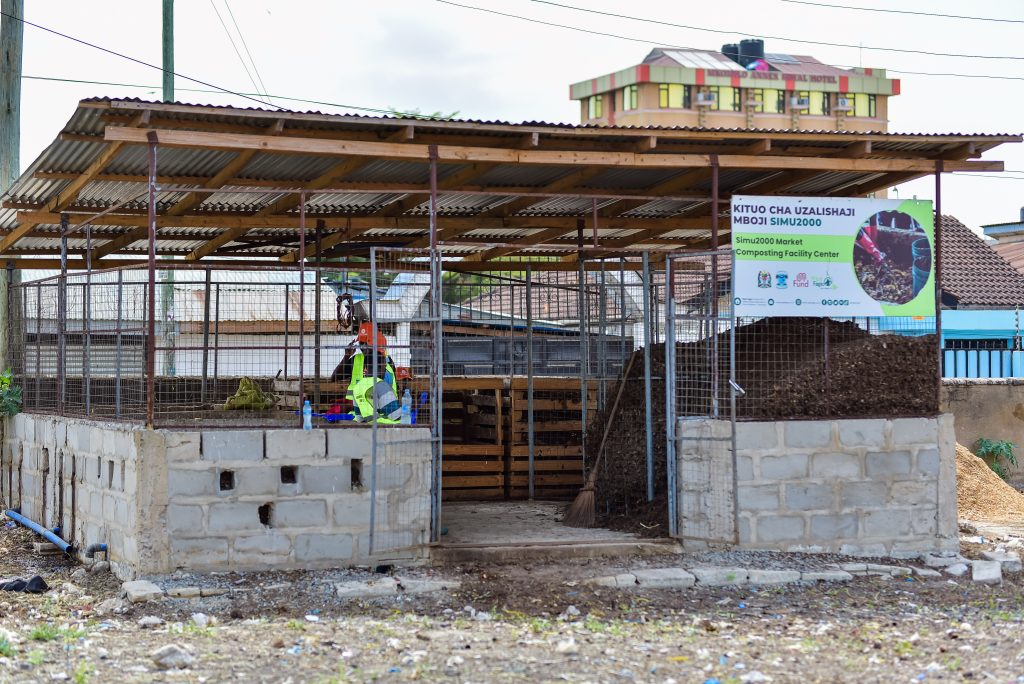
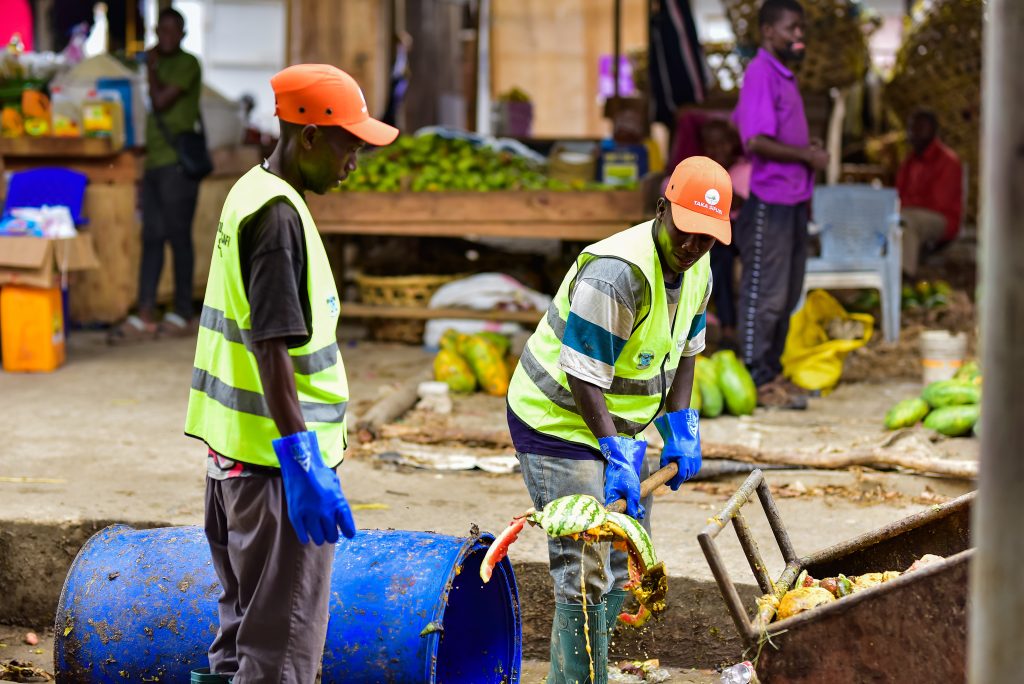
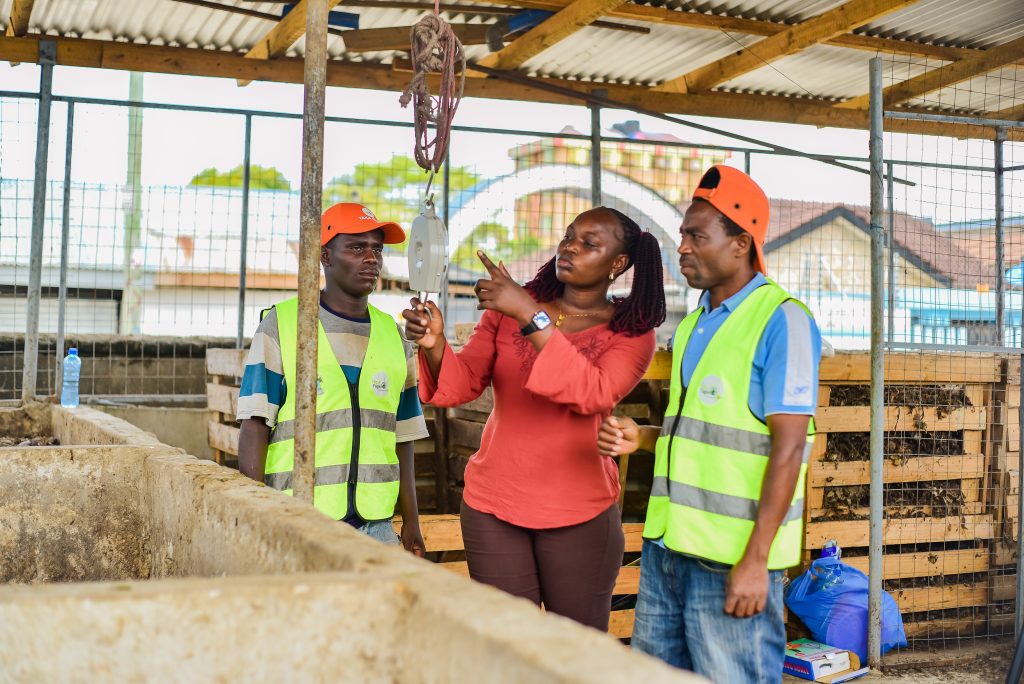
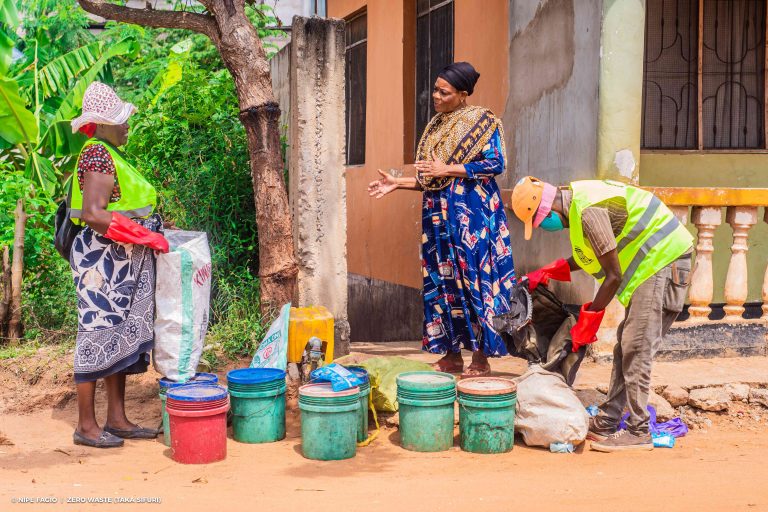
Before launching the project, we conducted a two-day market survey involving 164 vendors. Findings revealed that 75% of the waste generated was organic, yet 95% of vendors did not separate it at the source. Awareness was low, and waste management infrastructure was inadequate. Through multiple training sessions and awareness campaigns, we helped shift this mindset. By December 2024, the Simu2000 Organic Composting Facility was completed, a compact, efficient setup that turns organic market waste into rich compost within just five weeks. Waste collectors trained by Nipe Fagio separate fruit peels, vegetable leftovers, and food scraps at designated collection points. Vendors now proudly sort waste, and the once-filthy market lanes are cleaner, safer, and more pleasant to work in.
The Ubungo Municipal Council played a vital role by providing space, enforcing waste segregation bylaws, and integrating the initiative within Tanzania’s National Solid Waste Management Strategy. This alignment between local government and grassroots action is what makes this project a model for replication across Tanzania. Swalehe Mgwami, the market chairperson, is making vivid efforts, “We have agreed here that our market environment must remain clean. Once you compare the current market status and the past, it’s quite different. We are making progress, and if anyone is found, we have bylaws and segregation bins. The good news is that the law is followed compared to the time when there were no dustbins available. Once we see someone littering, we won’t accept it. We are grateful that the market vendors have embraced this knowledge and understand what to do.”
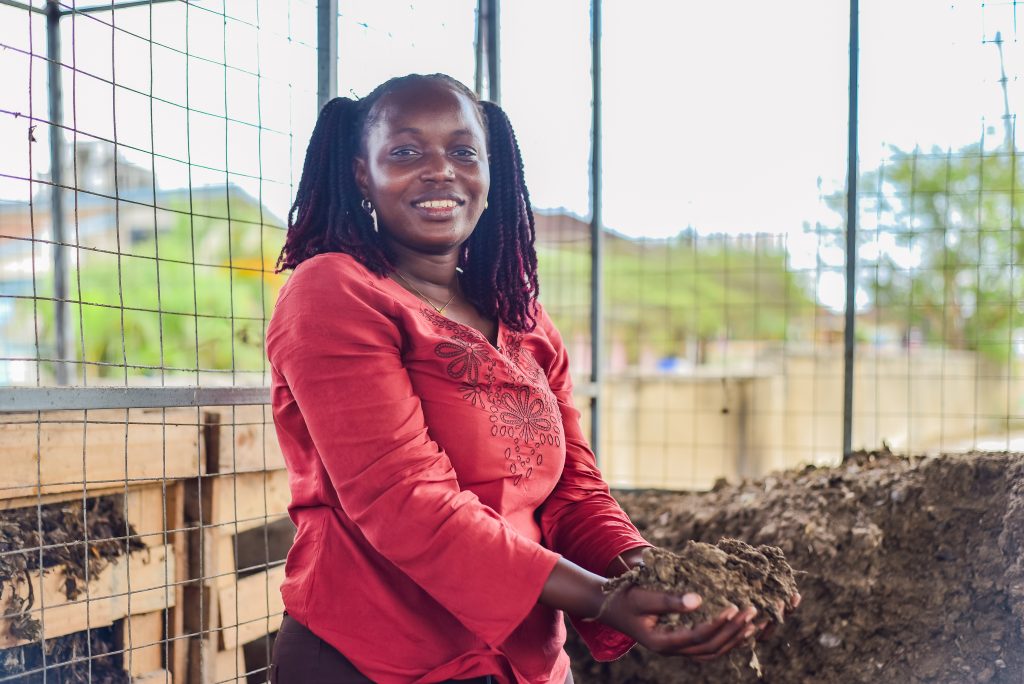
Today, Simu2000 Market is not just a trading hub; it’s a living example of the circular economy in action. The composting project has successfully diverted an average of 75 tons of organic waste every month from landfills, producing 15 tons of nutrient-rich compost used by local farmers and schools. In climate terms, that’s a 77% reduction in methane emissions, equivalent to preventing 4.86 tons of CH₄ annually, a major win for climate mitigation. Every day, 800kg to 1 ton of organic waste is collected and processed. The waste is mixed with sawdust in a 1:1 ratio to balance carbon and nitrogen, then moved through chambers for aeration, turning, and curing. After 35 days, the result is a dark, crumbly compost, free of odor, rich in nutrients, and ready for use. The compost is sold at subsidized rates to local farmers and schools. Feedback has been overwhelmingly positive, with improved soil structure, better water retention, and visibly higher crop yields.
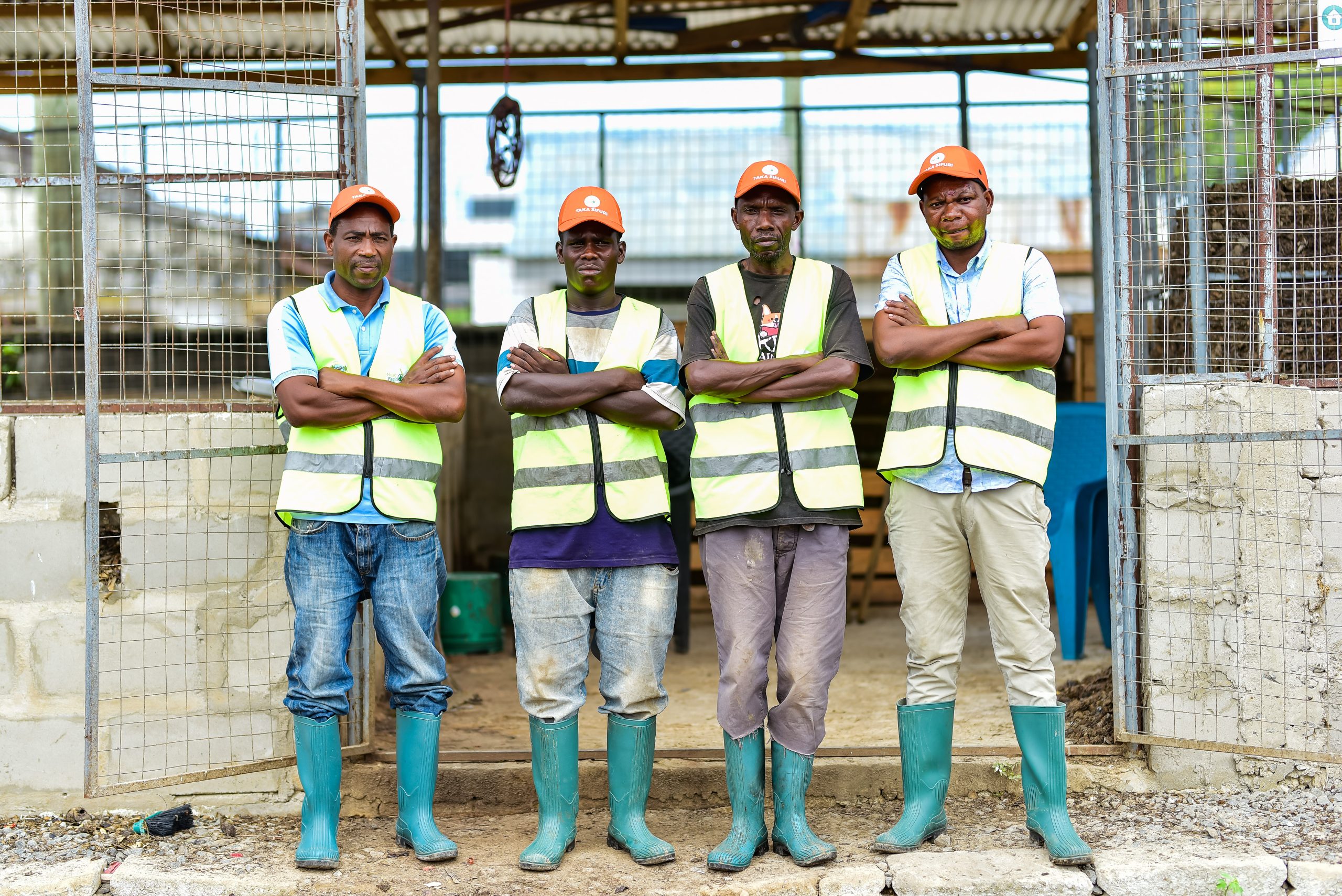
The project engages 200+ market vendors and has created four full-time jobs for waste collectors. These collectors, once informal and unrecognized, now form part of the government system, trained, organized, and paid for their work. Yohana Chigunje Kangwe, a Waste Collector at Simu2000 Composting Facility Center, testified that, “We are very grateful to Nipe Fagio and Ubungo Municipal. Our lives have changed compared to the past. Personally, I have a family now, and I am paying school fees for my child in standard 4, through the income I receive from this project. I’m also paying rent, and I live a better life.”
The project’s benefits go far beyond cleanliness. It’s creating jobs, building financial literacy, and reducing costs for the municipality. Waste management costs dropped from USD 1,263 to USD 421 per month, proving that sustainable solutions can also be financially smart. Ramadhan Madohora, now a Waste Collector at Simu2000 Composting Facility Center, said, “Personally, this project has helped me a lot. I now receive a monthly income; before, I didn’t even know how to use an NMB Bank account. But through this project, they helped to open bank accounts, so now I’m saving money.”
The compost itself has become a local success story. For example, Yusuph Makamba Secondary School uses Simu2000 compost in its garden, turning its compound into a green oasis. Vegetables grown there now supplement students’ meals, closing the loop between waste, food, and wellbeing. Quoting one of the students at Yusuph Makamba, Brandon Stanley Mbaga, he said, “The vegetables we plant at Yusuph Makamba School are part of our meals, like rice, and they help us students. These vegetables are grown using compost, which provides the vitamins needed in our bodies. As for me and our Environmental Club, we share this knowledge with our fellow students.” Apart from nutritional value, Sharifa H. Hatibu, a Teacher at Yusuph Makamba Secondary School, said, “The costs have decreased. When we were using industrial fertilizers or cow dung, we were spending a lot of money and time searching for where we could get it. Since we started using compost from Simu2000, it has simplified our gardening activities here at school.”
However, not everything came easily. Some vendors resisted change, space for composting was tight, and financial resources were stretched. But the biggest lesson? Change happens when communities are part of the process. Once vendors saw results, cleaner surroundings, and potential income, they became champions of the cause. This composting project is a low-cost, replicable solution that aligns perfectly with Tanzania’s environmental and climate goals. It demonstrates that with the right data, policy support, and community action, waste can be transformed from a nuisance into a resource. We recommend scaling this model to other markets across the region. Doing so would not only tackle waste challenges but also cut methane emissions, improve soil health, and support farmers.
Lawi Benard, Head of Solid Waste Management and Sanitation Unit, Ubungo Municipal Council, firmly said, “The municipal council had plans to expand and establish more Composting Facilities centers. Currently, we have this one at Simu2000; we are looking forward to replicating it in Kiluvya and Goba, and the Mabibo market.”
This transformation at Simu2000 was made possible through the generous support of the UMI Fund, the partnership of Ubungo Municipal Council, and the dedication of market vendors, leaders, and waste collectors. Together, they’ve proven that waste management doesn’t need to be complicated; it just needs commitment and community ownership.