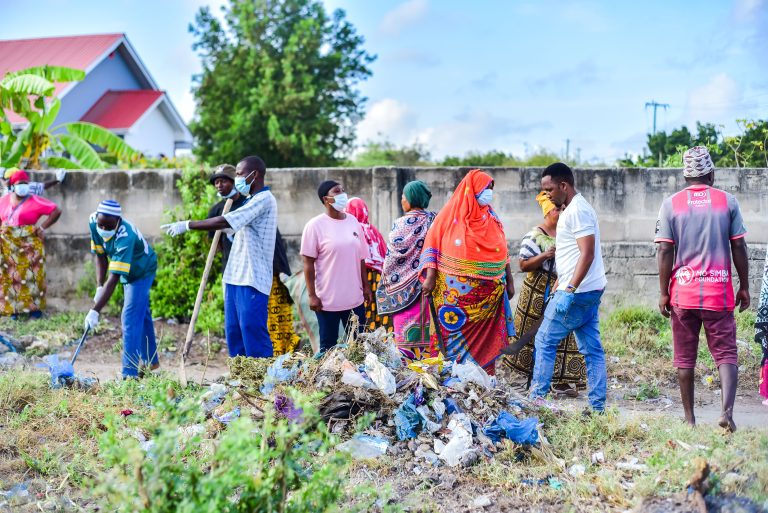

Tanzania’s coastline stretches along the Indian Ocean, supporting livelihoods, biodiversity, and a deep cultural heritage. Yet, the health of this vital ecosystem is under threat. Dar es Salaam, the largest coastal city, is drowning in marine pollution. According to a World Bank (2022), in both Zanzibar and Tanzania, plastic pollution is ubiquitous along their coastlines, encroaching on ecosystems as well as coastal tourism sites, which represent one of the country’s most lucrative industries. The United Nations Environment Programme (UNEP) has indeed warned that the world’s oceans may contain more plastic than fish (by weight) by 2050 if current trends continue. This stark prediction highlights the severe consequences of unchecked plastic pollution in marine environments.
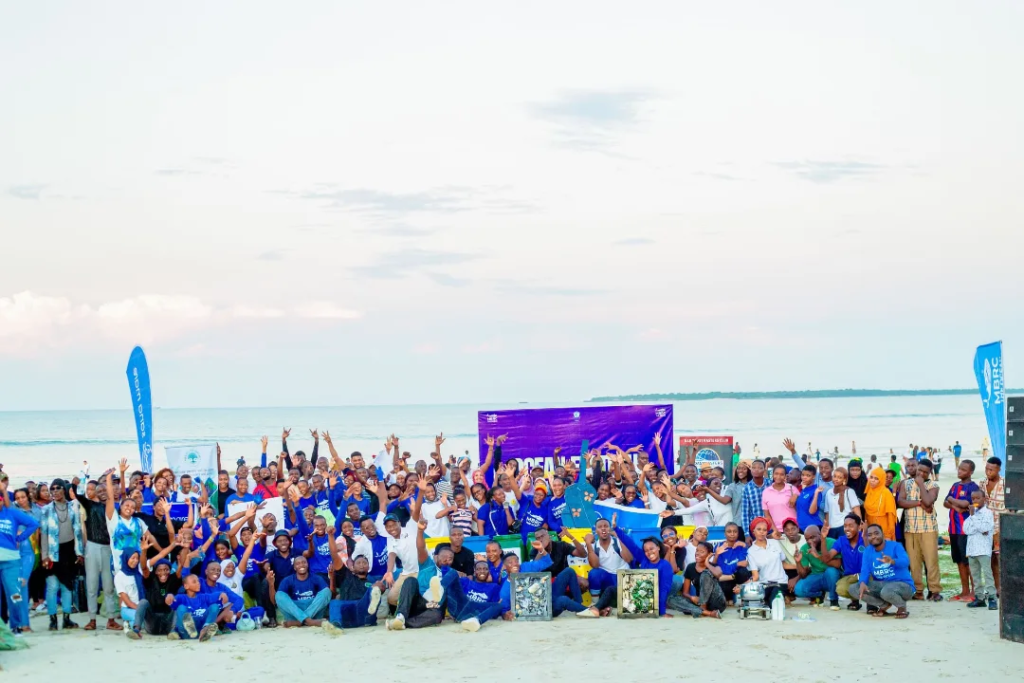
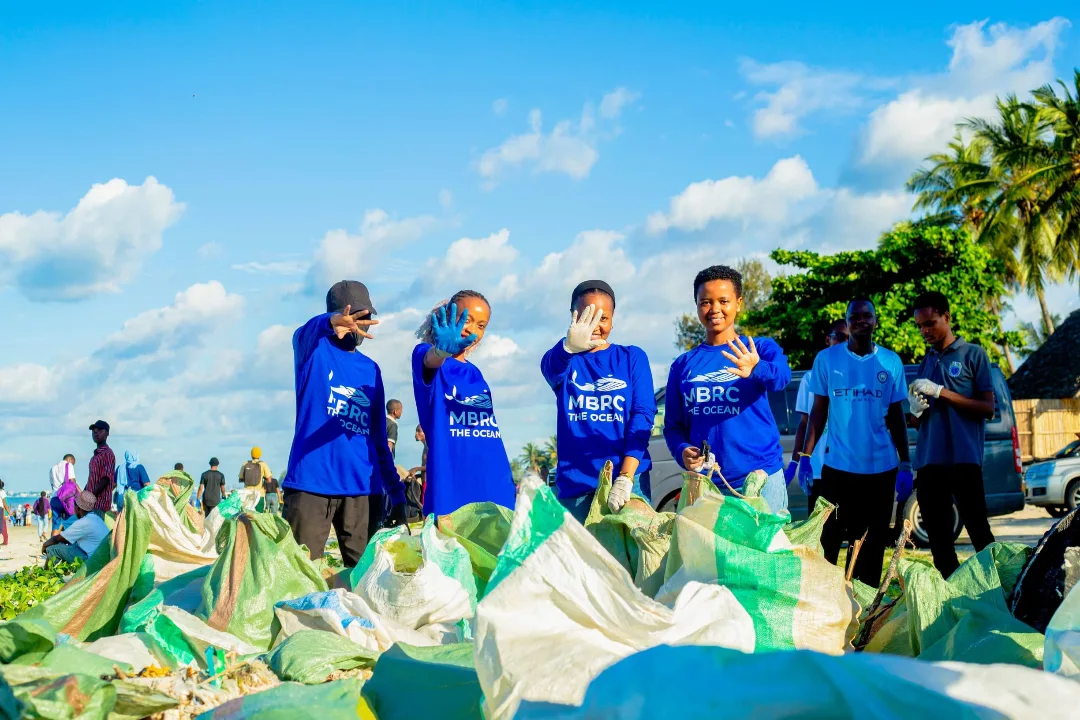
On June 8, 2025, we proudly joined the Ocean Festival hosted by MBRC Tanzania and Sustainable World Initiative (SWI), aligning with the global theme: “Wonder: Sustaining What Sustains Us” a reminder that “the ocean connects, sustains, and supports us all. Yet its health is at a tipping point.” – UN World Oceans Day. Held across eight coastal sites in Dar es Salaam, the event celebration united hundreds of changemakers from civil society to academia, private sector to government in honoring the ocean as the source of life and sustenance.
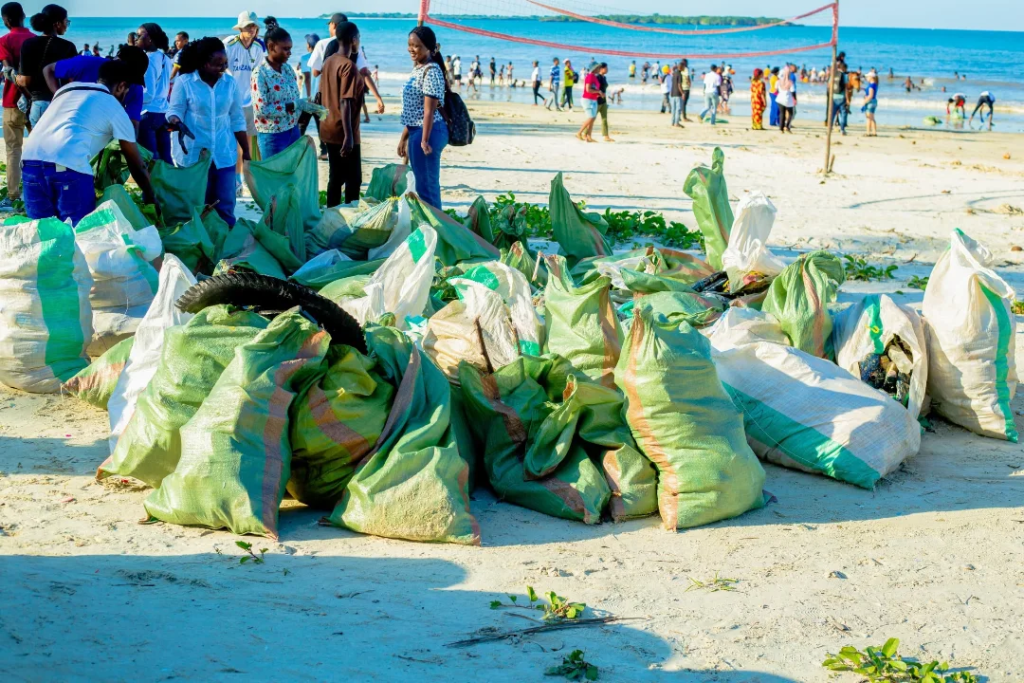
Our YA (Youth Ambassadors) team conducted a WABA (Waste & Brand Audit) immediately after the coastal cleanup. This methodology identifies pollution by type and brand, fueling Extended Producer Responsibility (EPR) campaigns. The event brought together 316 participants mostly youth who collected 108 waste bags weighing 1,875 Kg. The top polluters Identified were beverage and snack manufacturers using multilayer plastic packaging. The findings will support policy dialogue for circular economy models, producer take-back schemes, and more sustainable packaging alternatives.
Beaches in Dar es Salaam have become hotspots of visible waste, damaging not only the environment but also tourism and local fisheries. According to the International Union for Conservation of Nature (IUCN), “95% of the plastic waste is mismanaged and can potentially leak to the oceans, rivers and lakes of Tanzania. 29,000 tonnes of plastic leaked to ocean, rivers and lakes in 2018 in Tanzania.”
Tanzania has been addressing plastic pollution since its 2019 ban on single-use plastic bags, and is continuing to work towards a clean environment free from plastic pollution (The Global Plastic Action Partnership). H.E Dr. Philip Mpango, Vice President of Tanzania asserted that, “We need a planet earth which is clear of hazardous plastic waste”
Beyond cleanups and data, this year’s festival highlighted the rich coastal heritage of Tanzania. Community exhibitions, traditional dances, storytelling, and music echoed one truth, oceans are not just resources, they are identity. As the UN notes, “To care for the ocean is to care for ourselves.” (UN World Oceans Day)
In 2022 we worked with the World Bank, data team at the University of Dar es Salaam UDSM, as well as the Tanzania FlyingLabs, a drone and technology lab to deliver a local marine debris control and coastal zone management project. We mapped 11 coastal hotspots, three in Zanzibar and eight on Tanzania’s mainland coast to analyze the kinds of marine plastic waste that end up there and their most likely sources. During the reporting, Ana Rocha the Executive Director of Nipe Fagio commented that, “Marine pollution is not generated in the ocean; it is a consequence of land pollution. And land pollution is a consequence of unregulated production.”
Ultimately, as we mark World Ocean Day 2025, Tanzania’s commitment to a clean and resilient environment under Vision 2025 must prioritize ocean conservation. Marine pollution, especially from plastic, threatens coastal communities, biodiversity, and our blue economy, but community action, youth engagement, and data-driven advocacy are proving effective. According to World Economic Forum, “Plastic pollution is a defining environmental crisis of our time. In March 2022, 175 countries adopted a historic resolution at the fifth session of the United Nations Environment Assembly (UNEA-5.2) to develop an international, legally binding agreement on plastic pollution, including in the marine environment.”
Looking ahead to the Global Plastic Treaty negotiations, Tanzania must advocate for a strong, legally binding agreement that includes global plastic reduction targets, corporate accountability, and support blue economy. It’s also crucial to integrate voices from the informal sector, especially waste pickers, and use data from marine litter to strengthen our national position. This moment calls for bold action from coastal communities to policymakers to protect the ocean that sustains us all. It is an economic, social, and development imperative.